


)

Because Your Home Should Feel Clean, Safe, and Effortless
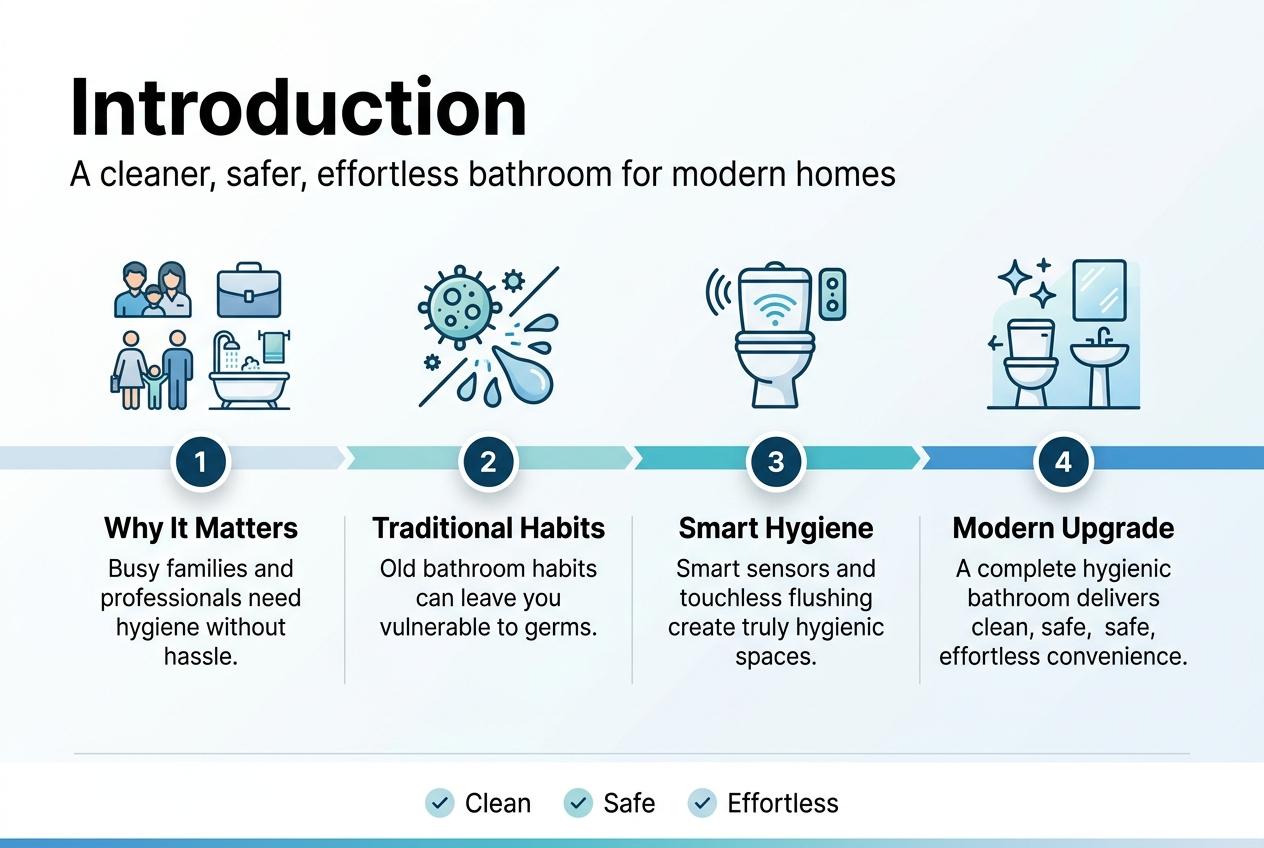
Your bathroom should be a sanctuary where cleanliness meets convenience – not a breeding ground for germs and frustration. For busy families, working professionals, and anyone who values hygiene without the hassle, this guide reveals how simple upgrades can transform your daily routine.
You'll discover why traditional bathroom habits leave you vulnerable to germs, how smart toilet sensors and touchless toilet flusher technology create truly hygienic spaces, and why this simple upgrade outperforms old-fashioned methods. We'll also explore what makes a complete hygienic bathroom setup and how modern bathroom technology delivers the clean, safe, and effortless experience your home deserves.
1. The Hidden Problem: Germs in Everyday Bathroom Habits
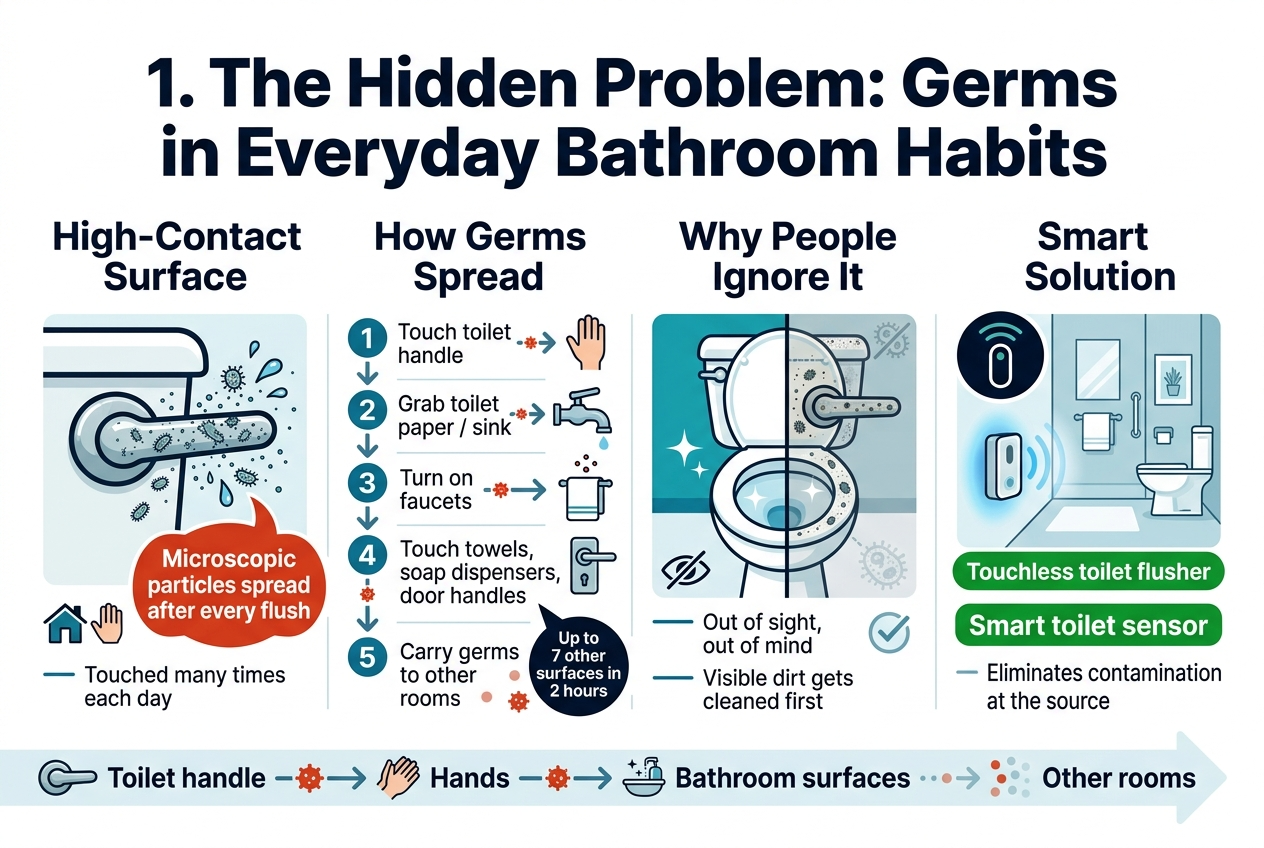
Why toilet handles are high-contact surfaces
Think about how many times you touch your toilet handle each day. Now multiply that by everyone in your household. That innocent-looking lever gets more action than your smartphone, yet most people never consider what's actually living on its surface.
Every flush brings a fresh coating of microscopic particles from the toilet bowl onto the handle. Your hands pick up these germs, then carry them to light switches, door knobs, faucets, and everything else you touch. The bathroom becomes ground zero for spreading bacteria throughout your entire home.
Public restrooms have caught on to this problem – that's why you see touchless toilet flusher systems everywhere from airports to restaurants. But somehow, we've ignored this same issue in our own homes where we spend most of our time.
How germs spread in households
Once bacteria land on that toilet handle, they don't just stay there. They hitch a ride on your hands and spread faster than gossip in a small town. Studies show that a single contaminated surface can spread germs to up to seven other surfaces within just two hours.
Here's how the domino effect works in your bathroom:
-
Touch the toilet handle after flushing
-
Grab toilet paper or reach for the sink
-
Turn on faucets with contaminated hands
-
Touch towels, soap dispensers, and door handles
-
Carry germs to other rooms on your hands
Kids are especially good at this unwitting germ distribution network. They touch everything without thinking twice, turning your home into a bacterial highway system. Even the most diligent hand-washing routine can't completely stop this cycle because you're constantly re-contaminating surfaces.
Why most people ignore this
People don't think twice about toilet handles because the problem stays invisible. You can't see bacteria, so it's easy to pretend they don't exist. Plus, we've been flushing toilets the same way for decades – it feels normal and harmless.
Most families focus on cleaning visible dirt and grime while completely overlooking these hidden contamination hotspots. We scrub the toilet bowl until it sparkles but ignore the handle that everyone touches multiple times daily.
The "out of sight, out of mind" mentality keeps families stuck in outdated bathroom habits. Meanwhile, smart toilet sensor technology offers a simple solution that eliminates the problem at its source, but many people don't even know these upgrades exist for home use.
2. Why Traditional Habits Aren’t Enough
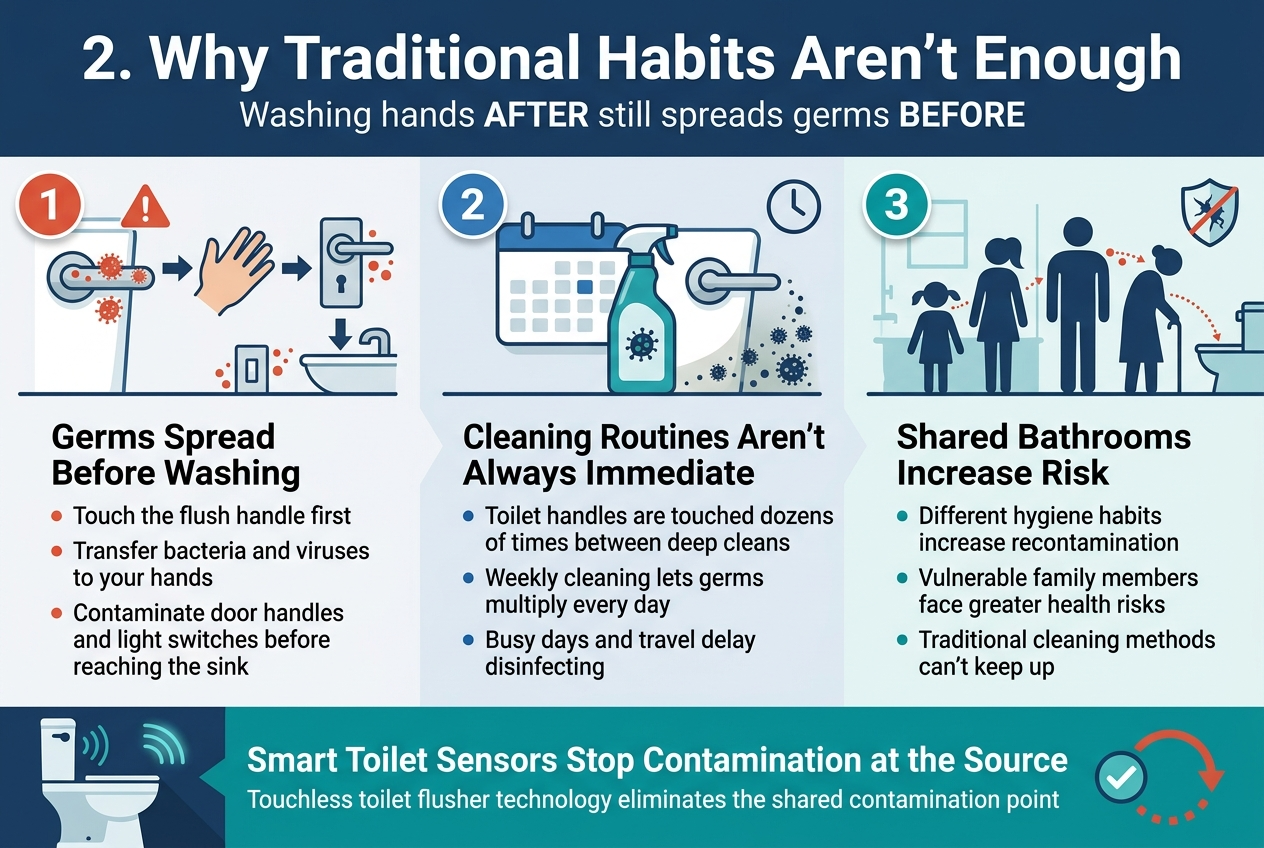
Washing hands AFTER still spreads germs BEFORE
Most people think washing their hands after using the toilet solves the hygiene problem. But here's what actually happens: you touch the toilet handle before washing, transferring bacteria and viruses from the flush mechanism to your hands. Then you touch door handles, light switches, and other surfaces on your way to the sink. Even after thoroughly washing your hands, you've already contaminated multiple surfaces that other family members will touch.
The toilet handle itself becomes a breeding ground for germs. Every person who uses the bathroom adds their own collection of bacteria to this shared surface. When you grab that handle, you're not just dealing with your own germs – you're picking up everyone else's too. This creates a continuous cycle of contamination that hand washing alone can't break.
Cleaning routines aren't always immediate
Regular cleaning schedules sound great in theory, but real life gets messy. Toilet handles get touched dozens of times between deep cleaning sessions. Even the most diligent households might clean bathrooms weekly, but germs multiply every single day. During busy periods, sick days, or when traveling, cleaning routines often get pushed back.
Daily disinfecting of every surface isn't practical for most families. Between work, school, and other responsibilities, who has time to sanitize the toilet handle after every use? Quick cleaning sprays help, but they're only effective if used consistently. Most people clean when they remember or when things look visibly dirty – not nearly enough to stay ahead of bacterial growth.
Shared bathrooms increase risk
Family bathrooms see constant traffic from multiple users with different hygiene habits. Kids forget to wash hands properly, teenagers rush through their routines, and guests might not know your family's cleaning standards. Each person introduces new germs while potentially picking up what others left behind.
The problem multiplies in households with elderly members, young children, or anyone with compromised immune systems. What might be a minor exposure for a healthy adult could pose serious health risks for vulnerable family members. Traditional cleaning methods can't keep up with the constant recontamination happening in busy household bathrooms.
Smart toilet sensors and touchless toilet flusher technology eliminate this shared contamination point entirely. When nobody has to touch the flush mechanism, the cycle of germ transfer stops before it starts.
Smarter Hygiene Solutions People Are Switching To
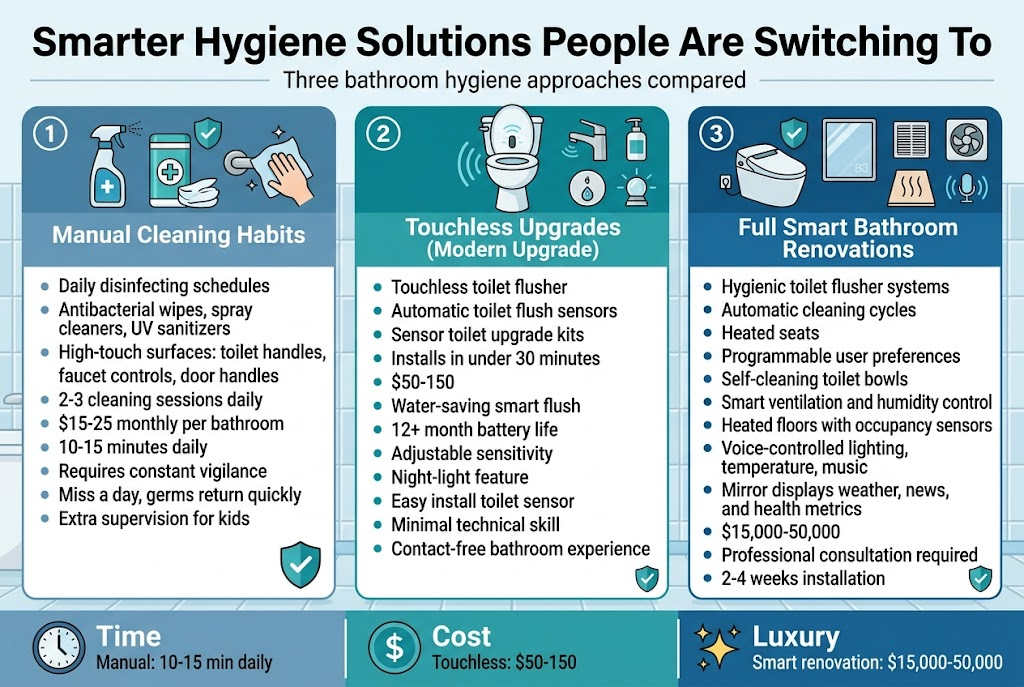
Option 1: Manual Cleaning Habits
Deep cleaning routines have become the go-to solution for many homeowners trying to maintain bathroom hygiene. This approach involves daily disinfecting schedules, multiple cleaning products, and constant vigilance about surface contact. People following this path typically invest in antibacterial wipes, spray cleaners, and UV sanitizers to combat germs on high-touch surfaces like toilet handles, faucet controls, and door handles.
The commitment level is significant - many families now clean bathroom surfaces 2-3 times daily, especially after the pandemic heightened awareness about surface transmission. While effective at reducing germs, this method demands considerable time and ongoing expense. Quality disinfectants cost $15-25 monthly per bathroom, and the labor investment averages 10-15 minutes daily just for basic sanitizing routines.
Manual cleaning also creates dependency on remembering to clean consistently. Miss a day or two, and germ buildup returns quickly. Parents with young children find this particularly challenging since kids rarely remember to clean surfaces after use, creating constant supervision needs.
Option 2: Touchless Upgrades (Modern Upgrade)
👉 One increasingly popular solution is using a touchless toilet flusher powered by a Smart toilet sensor
Smart technology offers a middle-ground approach that eliminates many high-touch surfaces without requiring major construction. Touchless toilet flusher systems represent the most popular starting point, converting standard toilets into hands-free toilet innovation setups through simple retrofitting.
Automatic toilet flush sensors detect user presence and handle flushing without any physical contact. Modern sensor toilet upgrade kits install in under 30 minutes using existing toilet hardware, making this accessibility appealing to renters and homeowners alike. These systems typically cost $50-150 and provide immediate hygiene benefits.
Smart toilet sensor technology has evolved beyond basic motion detection. Advanced models include:
-
Water-saving smart flush options with dual-flush capabilities
-
Battery life extending 12+ months
-
Adjustable sensitivity settings for different user heights
-
Night-light features for visibility
The upgrade to automatic flusher process requires minimal technical skill. Most easy install toilet sensor products use adhesive mounting or simple bracket systems. Professional installation isn't necessary, unlike complete bathroom renovations.
Additional touchless upgrades include sensor faucets, automatic soap dispensers, and motion-activated lighting. Combined, these create a largely contact-free bathroom experience while maintaining existing fixtures and layout.
Option 3: Full Smart Bathroom Renovations
Complete modern bathroom technology integration represents the premium approach to hygienic bathroom design. These renovations incorporate hygienic toilet flusher systems as part of comprehensive smart ecosystems that control every aspect of bathroom function.
Full smart bathrooms feature integrated toilet-bidet combinations with automatic cleaning cycles, heated seats, and programmable user preferences. Water temperature, pressure, and positioning adjust automatically based on user profiles. Self-cleaning toilet bowls use electrolyzed water and UV sterilization to maintain sanitary conditions without chemical cleaners.
Smart ventilation systems monitor humidity and air quality, automatically adjusting fan speeds and introducing fresh air circulation. Heated floors with occupancy sensors provide comfort while preventing moisture buildup that encourages bacterial growth.
Voice-controlled systems manage lighting, temperature, music, and even toilet paper ordering. Mirror displays show weather, news, and health metrics while users complete morning routines.
Investment levels typically range from $15,000-50,000 depending on bathroom size and feature selection. While expensive upfront, these systems reduce long-term maintenance costs and provide luxury hotel-level experiences daily.
Planning requires professional consultation since electrical, plumbing, and ventilation modifications affect home systems. Installation timelines span 2-4 weeks, requiring temporary bathroom arrangements during construction.
3. What Makes a Truly Hygienic Bathroom Setup

Touch-free operation (no-contact use)
The cornerstone of any modern hygienic bathroom setup is eliminating the need to touch surfaces that countless hands have contacted before. A touchless toilet flusher represents the perfect solution to this common concern. When you can flush without ever making physical contact with the handle, you're dramatically reducing your exposure to germs and bacteria that thrive on frequently-touched surfaces.
Smart toilet sensors detect your presence and automatically trigger the flush mechanism when you move away from the toilet. This hands-free toilet innovation works through infrared technology that recognizes body heat and movement patterns. The system activates within seconds, ensuring you never have to think about manual flushing again.
Beyond the obvious hygiene benefits, touch-free operation proves especially valuable for families with young children, elderly members, or anyone with mobility challenges. No more worrying about whether everyone remembered to flush or whether they touched potentially contaminated surfaces in the process.
Easy installation (no complicated setup)
Getting your bathroom upgraded shouldn't require a plumbing degree or expensive contractor visits. The best sensor toilet upgrade options work with your existing toilet setup, requiring minimal tools and basic DIY skills.
Most quality automatic toilet flush systems attach directly to your current toilet tank without any permanent modifications. You'll typically need:
-
A screwdriver
-
About 30 minutes of your time
-
Access to the toilet tank
-
Basic ability to follow illustrated instructions
The easy install toilet sensor units come with all necessary mounting hardware and step-by-step guides. Many homeowners complete the installation during a weekend afternoon without any professional help. The sensors usually mount on the toilet tank or wall, with simple battery compartments that don't require electrical wiring.
Reliable performance
Your hygienic toilet flusher needs to work consistently, day after day, without false triggers or missed flushes. Top-quality sensors use advanced detection algorithms that differentiate between actual use and random movement in the bathroom.
Look for systems with adjustable sensitivity settings that let you customize the detection range. This prevents the toilet from flushing when someone simply walks past while ensuring it activates reliably when actually needed. Quality sensors also include delay timers that prevent multiple flushes in rapid succession.
Battery life becomes crucial for reliable performance. The best units operate for 12-24 months on standard batteries, with low-battery indicators that give you plenty of warning before replacement time.
Water efficiency
Modern bathroom technology has revolutionized water conservation in toilet systems. Smart sensors can actually reduce water usage compared to traditional manual flushing because they eliminate accidental multiple flushes and ensure optimal flush timing.
Many water-saving smart flush systems include dual-flush capabilities that automatically select the appropriate water volume based on usage patterns. This intelligent approach can reduce household water consumption by 20-30% compared to older toilet systems.
Low maintenance design
The ideal upgrade to automatic flusher requires minimal ongoing attention. Quality sensors feature sealed electronics that resist bathroom humidity and cleaning products. The units should wipe clean with standard bathroom cleaners without special care requirements.
Look for sensors with easily accessible battery compartments and simple troubleshooting procedures. The best designs include indicator lights that show system status and alert you to any maintenance needs before problems develop.
4. Why Smart Toilet Sensors Are a Game-Changer

Automatic Flushing Detection
Smart toilet sensors bring precision to your bathroom routine with advanced detection technology that knows exactly when you need it to work. These touchless toilet flusher systems use infrared sensors to detect when someone approaches and leaves the toilet area, eliminating the guesswork of traditional motion sensors that often misfire or fail to activate.
The detection range is carefully calibrated to avoid false triggers while ensuring reliable activation every time. Unlike basic motion detectors that might flush when you're simply walking past, smart toilet sensors distinguish between intentional use and casual movement. This sensor toilet upgrade creates a seamless experience where the flush happens automatically after you stand up, giving you complete hands-free operation.
What sets these systems apart is their learning capability - they adjust to your specific bathroom layout and usage patterns over time, reducing unnecessary flushes and improving accuracy. The sensors work effectively in various lighting conditions, from bright daylight to complete darkness, making them reliable 24/7.
Water-Saving Smart Flush Technology
Modern automatic toilet flush systems don't just provide convenience - they're engineered to conserve water through intelligent flush control. These devices analyze usage patterns and adjust flush volume accordingly, often reducing water consumption by 20-30% compared to manual flushing habits.
The technology distinguishes between different types of waste and automatically selects the appropriate flush strength. Short flushes for liquid waste and full flushes when needed, all without any input from you. This water-saving smart flush approach means you're not wasting water on unnecessarily powerful flushes every single time.
Many smart sensors also feature delay settings that prevent multiple flushes in quick succession, a common problem with older automatic systems. The water savings add up quickly, especially in households with multiple users, making this upgrade both environmentally friendly and cost-effective on your water bills.
USB Charging (No Constant Battery Changes)
Battery-powered toilet sensors are frustrating - they always seem to die at the worst possible moment. Modern bathroom technology has solved this problem with USB-rechargeable systems that eliminate the constant battery replacement cycle entirely.
These rechargeable units typically last 6-12 months on a single charge, depending on usage frequency. When the battery runs low, a simple LED indicator gives you plenty of warning, and charging takes just a few hours with any standard USB cable. No more scrambling to find the right batteries or dealing with corroded battery compartments.
The rechargeable design also makes these systems more reliable over time. Traditional battery-powered sensors often experience power fluctuations as batteries drain, leading to inconsistent performance. USB-powered units maintain consistent sensor sensitivity and response times throughout their charge cycle.
Compact, Modern Design
Today's hygienic toilet flusher units are designed to blend seamlessly with contemporary bathroom aesthetics. Gone are the bulky, industrial-looking sensors of the past - these sleek devices complement rather than clash with your bathroom design.
Most units measure just 3-4 inches in length and mount discretely on the toilet tank or wall. The minimalist design typically features a clean white or black finish that works with virtually any bathroom color scheme. LED status indicators are subtle and unobtrusive, providing necessary feedback without creating visual distraction.
Installation requires no permanent modifications to your toilet - these devices attach with strong adhesive backing or adjustable brackets that won't damage surfaces. The compact size means they don't interfere with toilet tank lids or nearby fixtures, making them perfect for smaller bathrooms where space is at a premium.
The streamlined appearance actually enhances your bathroom's modern look while delivering the practical benefits of hands-free toilet innovation. It's an easy install toilet sensor solution that transforms your bathroom experience without compromising your design vision.
5. Why This Simple Upgrade Outperforms Traditional Methods

More Hygienic Than Manual Flushing
Traditional toilet handles are germ magnets. Think about it - every person who uses the bathroom touches that same surface, creating a constant cycle of contamination. Studies show toilet flush handles harbor more bacteria than most other surfaces in your bathroom. A touchless toilet flusher eliminates this problem entirely.
With automatic toilet flush technology, your hands never touch contaminated surfaces. The smart toilet sensor detects when you've finished and flushes automatically, breaking the chain of bacterial transmission that happens with manual handles. This hands-free toilet innovation means you're not picking up germs from the last ten people who used your bathroom.
The hygiene benefits extend beyond just avoiding germs. You don't need to worry about whether guests properly wash their hands after touching the handle, because there's no handle to touch. Your bathroom becomes a cleaner, safer environment for everyone in your household.
More Affordable Than Full Upgrades
Full smart toilet replacements can cost thousands of dollars, making them out of reach for most homeowners. A sensor toilet upgrade offers the same core benefits at a fraction of the cost. Instead of replacing your entire toilet, you're adding smart functionality to what you already have.
Professional modern bathroom technology installations typically cost between $50-200, compared to $1,500-5,000 for complete smart toilet systems. This easy install toilet sensor approach makes hygiene upgrades accessible to virtually any budget.
You get the essential benefits - hands-free operation, improved hygiene, and modern convenience - without the massive expense. The return on investment is immediate through reduced cleaning time and improved bathroom safety.
More Convenient Than Constant Cleaning
Manual flushing means constant cleaning of handles, especially in high-traffic bathrooms. With a hygienic toilet flusher, you eliminate one of the most frequently touched surfaces in your bathroom. This water-saving smart flush technology also means consistent, optimal water usage with every flush.
The convenience extends to maintenance too. Upgrade to automatic flusher systems typically require minimal upkeep - just occasional battery changes or sensor cleaning. Compare this to daily sanitizing of traditional handles and the difference is dramatic.
Your cleaning routine becomes simpler and more effective when you remove the biggest germ hotspot from the equation.
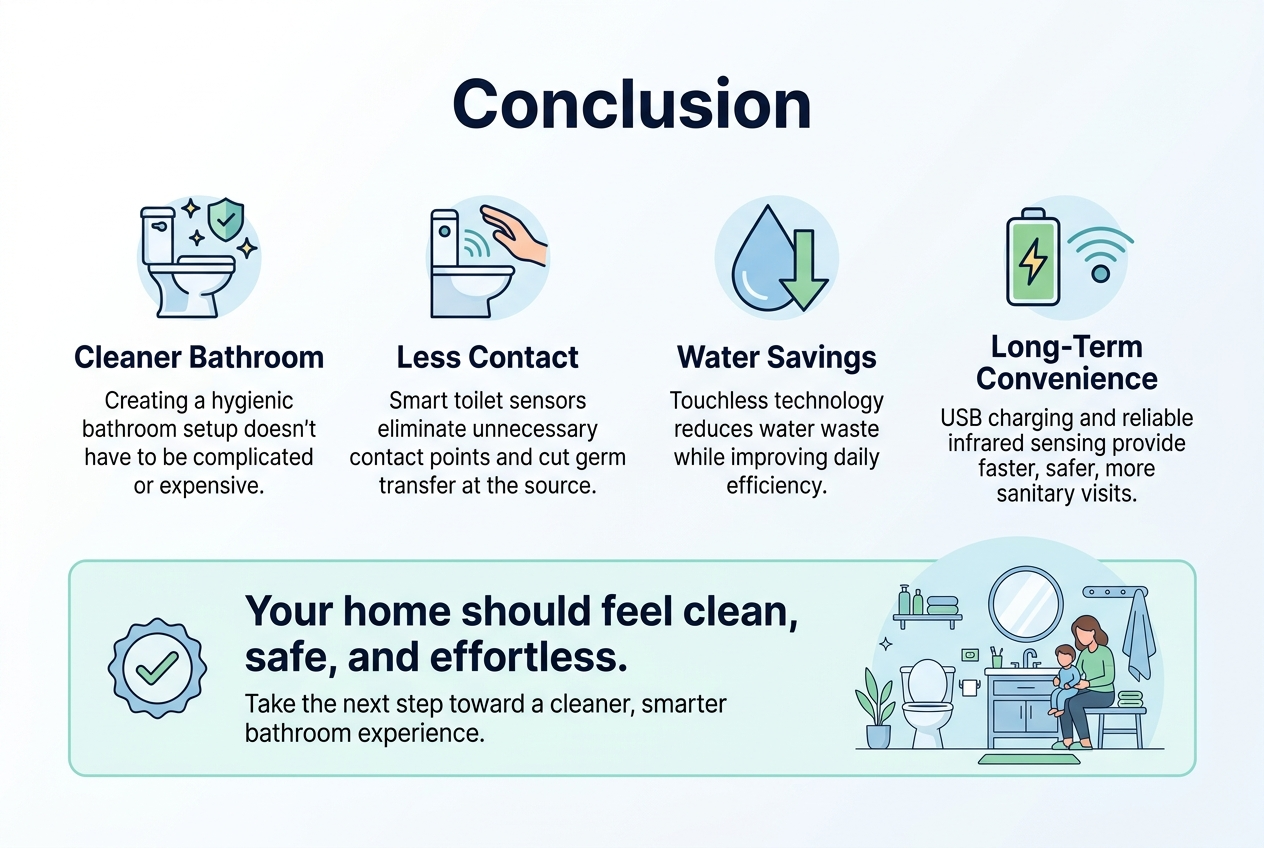
Creating a truly hygienic bathroom setup doesn't have to be complicated or expensive. As we've explored throughout this post, traditional cleaning habits often fall short of addressing the hidden germ hotspots in our daily routines. Smart toilet sensors represent a simple yet transformative upgrade that eliminates unnecessary contact points, reduces water waste, and makes bathroom visits faster and more sanitary for everyone in your household.
The evidence is clear: touchless technology outperforms traditional methods by cutting germ transfer at the source while providing long-term convenience through USB charging and reliable infrared sensing. Your home should feel clean, safe, and effortless – and with modern hygiene solutions like smart toilet sensors, achieving that goal is more accessible than ever. Take the next step toward a cleaner, smarter bathroom experience that protects your family's health while simplifying your daily routine.
👉 Do you ever think about how clean your bathroom really is? Or do you just rely on regular cleaning? Share your thoughts below!
💡 If you’re looking for a simple way to reduce germs and make your daily routine more convenient, exploring touch-free solutions can be a smart upgrade for your home.
👉 Curious to try this yourself? Check out a simple hands-free solution designed to make your bathroom cleaner and easier to use.
