


)

Take Back Control of Your Space—and Your Time
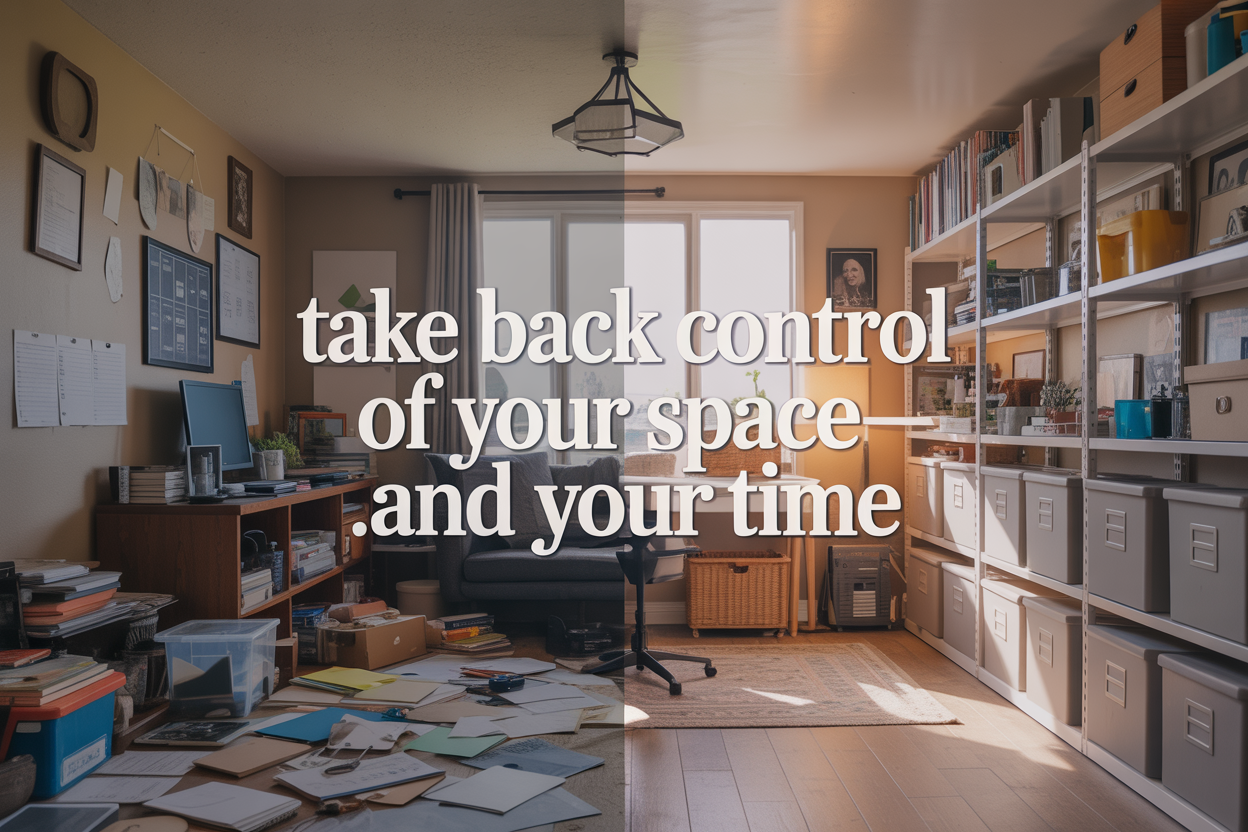
Your cluttered space is silently draining your time and energy every single day.
If you're tired of wasting precious minutes hunting for lost items or feeling overwhelmed by the mess around you, you're not alone. This guide shows busy people like you how to take back control of your space—and your time through simple organizing systems that actually stick.
For anyone struggling with:
- Endless searches for everyday items
- Feeling stressed by visual clutter
- Starting organization projects but never finishing them
- Wanting a tidy home without spending entire weekends cleaning
We'll uncover why clutter costs you more than just space and reveal the organizing systems for busy people that create lasting change. You'll discover simple organizing habits that take minutes to implement but save hours each week, plus see real-life organizing solutions that work for families, professionals, and anyone ready for clutter free living.
Ready to stop letting mess control your schedule? Let's dive in.
Section 1: Why Clutter Is Costing You More Than You Think

Time Wasted Searching
Ever spend twenty minutes hunting for your keys while already running late? That's just the tip of the iceberg when it comes to how clutter drains your day. The average person wastes 40 minutes daily searching for misplaced items—that's over 240 hours per year, equivalent to six full work weeks.
Common time-wasting searches include:
- Important documents buried under mail piles
- Phone chargers lost in bedroom chaos
- Tools scattered across garage workbenches
- Clothes hidden in overstuffed closets
- Kitchen utensils mixed in random drawers
These daily treasure hunts add up fast. When you multiply those lost minutes across weeks and months, you're looking at serious time theft. Smart home organization tips can eliminate this problem entirely by giving every item a designated home.
Reduced Productivity
Clutter creates a productivity killer that most people don't recognize. Your brain constantly processes visual information, even when you're not actively looking at something. A messy environment forces your mind to work overtime, filtering through visual noise instead of focusing on the task at hand.
Research shows that people working in organized spaces complete tasks 76% faster than those in cluttered environments. When papers cover your desk, dishes pile in the sink, and random items scatter across surfaces, your mental processing power gets diverted from meaningful work.
Productivity impacts from disorganization:
- Difficulty concentrating on important projects
- Increased mistakes and oversights
- Procrastination on challenging tasks
- Reduced creative thinking
- Poor decision-making abilities
Organizing systems for busy people can transform these productivity drains into smooth workflows. Simple changes like inbox systems, labeled storage, and clear surfaces create mental space for deeper thinking and better results.
Mental Fatigue from Disorganization
Living in chaos exhausts your brain before you even start your day. Visual clutter triggers cortisol production, your body's stress hormone, creating a constant low-level anxiety that saps mental energy. You might not consciously notice the mess, but your subconscious mind never stops processing it.
This mental load shows up as decision fatigue—that overwhelming feeling when simple choices become difficult. Should you tackle the laundry mountain or deal with the overflowing junk drawer? When everything feels urgent and nothing has a clear system, paralysis sets in.
Signs of clutter-induced mental fatigue:
- Feeling overwhelmed by simple tasks
- Avoiding certain rooms or areas
- Difficulty making basic decisions
- Increased irritability and stress
- Trouble sleeping in cluttered bedrooms
Clutter free living isn't just about aesthetics—it's about mental wellness. When your space supports rather than fights against you, your mind can finally relax and focus on what truly matters.
Section 2: The Real Problem Isn’t Mess—It’s Lack of System
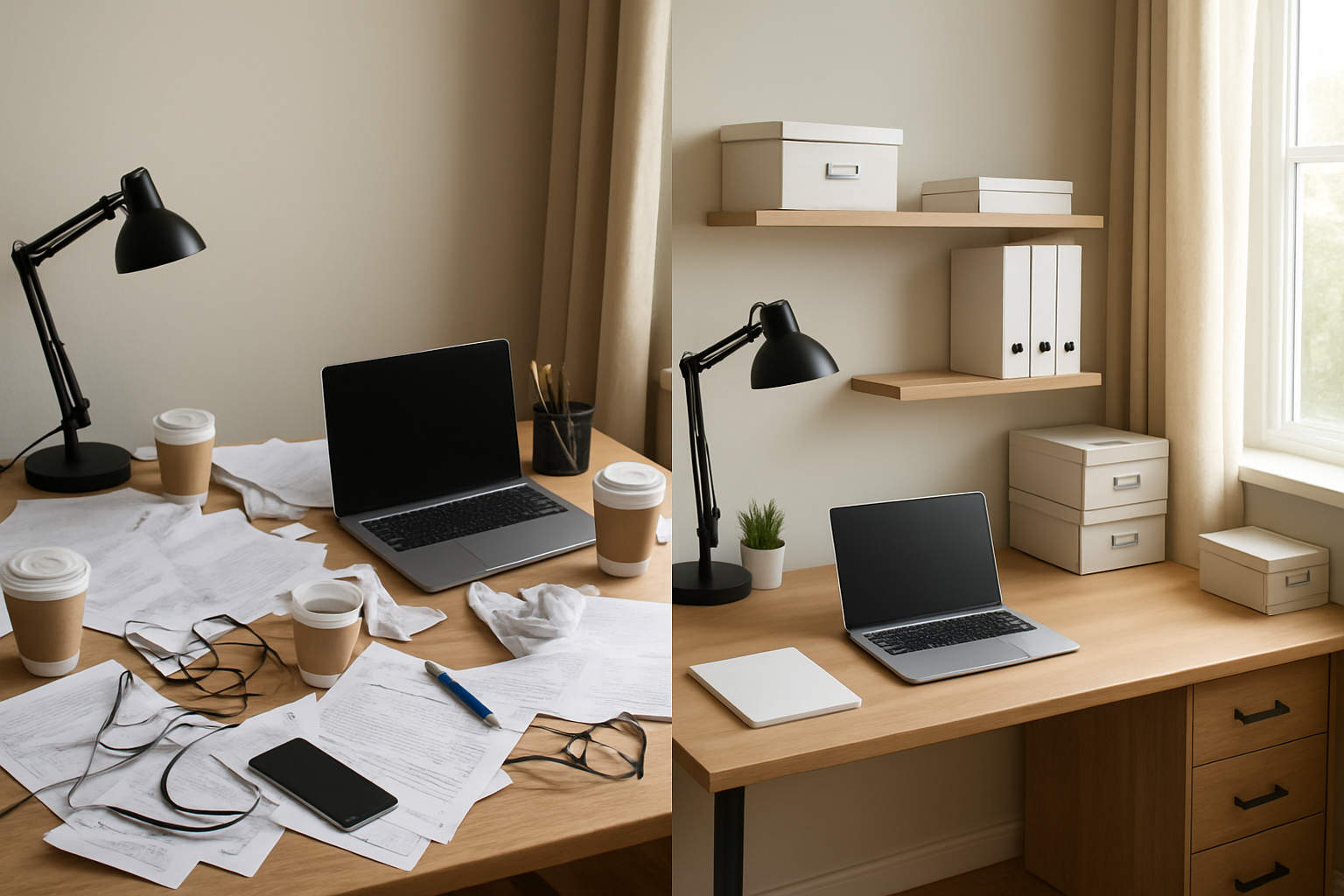
Why organizing once doesn't last
Most people approach organization like a weekend project. They dedicate an entire Saturday to sorting through their closet, feel amazing about the transformation, then wonder why everything's a disaster again within weeks. The problem isn't willpower or laziness—it's the absence of a reliable system.
Think of organization like brushing your teeth. You don't brush once and expect your teeth to stay clean forever. You need a daily routine that prevents buildup. The same principle applies to your living space. Without ongoing home organization tips that create sustainable habits, your freshly organized areas will inevitably return to chaos.
The biggest mistake people make is focusing on the end result instead of the process. They see those Instagram-worthy pantries and think the secret is buying matching containers. But those beautiful spaces work because they have clear systems for how items are categorized, where they belong, and how they get returned to their designated spots.
The importance of labeling & visibility
Clear labeling transforms good intentions into organizing systems for busy people that actually stick. When family members know exactly where the batteries go or which bin holds the school supplies, they're far more likely to put things back properly.
Labels eliminate guesswork and decision fatigue. Instead of wondering "Does this go with the craft supplies or the office stuff?", a simple label provides the answer instantly. This small friction reducer makes the difference between a system that works and one that falls apart under real-life pressure.
Visibility plays an equally crucial role in maintaining organized spaces. Store frequently used items at eye level in clear containers. Keep everyday essentials within arm's reach. When organizing solutions that work prioritize easy access over perfect aesthetics, people naturally gravitate toward maintaining the system.
"If you can't see it, you lose it"
Hidden storage might look tidier, but it often creates more problems than it solves. Items tucked away in opaque bins or deep drawers become forgotten territory. You end up buying duplicates because you can't remember what you already own, defeating the purpose of getting organized in the first place.
Transparent storage containers and open shelving aren't just trendy—they're practical organizing hacks that support long-term success. When you can scan your supplies at a glance, you make better decisions about what you need and what you already have.
This visibility principle extends beyond physical items to your systems themselves. The best home organization tips create obvious homes for everything. Your keys should have a designated hook by the door, not a "somewhere in the kitchen" general area. When every item has a specific, visible address, maintaining order becomes automatic rather than overwhelming.
Section 3: The Simple Habit That Changes Everything

Labeling as a System, Not a One-Time Fix
Most people think labeling is about slapping a sticker on a box and calling it done. That's like putting a band-aid on a broken pipe. True organization happens when labeling becomes your default way of thinking—a system that keeps working even when life gets chaotic.
The magic isn't in the label itself; it's in building the habit of always knowing where things belong. When you make labeling automatic, you're not just organizing your space—you're organizing your mind. Every item gets a home, every home gets a sign, and suddenly you're not wasting mental energy trying to remember where you put something.
Think of labels as your personal GPS for your stuff. Just like you wouldn't drive across town without directions, why navigate your home without clear markers? The best organizing systems for busy people work because they remove guesswork from daily life.
Examples: Cables
Cable chaos is the modern plague. You know the drill—tangled masses hiding behind desks, mystery cords stuffed in drawers, and that eternal question: "What does this charger go to?"
Start with simple solutions. Velcro ties with small labels work wonders. Write "iPhone charger," "laptop power," or "HDMI cable" on tiny labels and attach them directly to the cables. For storage, use clear bags or small boxes with bold labels on the outside.
Here's what changes everything: label both ends of longer cables. Tag the plug end with what it connects to ("Monitor") and the device end with where it goes ("MacBook USB-C"). When you're crawling under a desk, you'll thank yourself.
Create a charging station with labeled spots for each device. Use a small basket or drawer organizer with sections marked for different types of cables. Your home organization tips become effortless when everything has a designated spot and a clear name.
Examples: Storage Boxes
Storage boxes are either your best friend or your worst enemy—it all depends on what's written on the outside. Unlabeled boxes are black holes where good intentions go to die. You buy them thinking you'll remember what's inside, but six months later you're playing a frustrating game of storage box roulette.
Make labels big and bold. Use a label maker or thick permanent markers on white labels. Skip cute fonts and fancy colors—clarity wins over pretty every time. Write what's actually inside, not what you think might be inside someday.
Be specific with your labels. Instead of "Holiday Stuff," try "Christmas Lights & Ornaments." Instead of "Kids' Things," go with "Soccer Cleats & Equipment" or "Art Supplies." The five seconds you spend being specific saves you five minutes of digging later.
Stack smart with a simple system: label the front and top of every box. When boxes are stacked high, you can see the top labels without moving everything around. For seasonal items, add the year to track when you last used something.
Examples: Tools & Parts
Tool organization separates the pros from the weekend warriors. Walk into any master craftsman's shop and you'll see one thing immediately: everything has a place and that place has a name.
Start with your most-used tools. Outline them on pegboard and label underneath—this creates a visual system that screams when something's missing. Use a label maker for small drawers in tool chests. "Phillips Head Screws," "Wire Nuts," "Sandpaper 220 Grit"—the more specific, the better.
For parts and fasteners, clear containers are your friend, but only with proper labels. Group similar items and label both the container and the shelf spot. When you're in the middle of a project, covered in sawdust or grease, you don't want to play guessing games with hardware.
Create a simple inventory system for expensive tools. A small notebook or phone app with tool locations can save you from buying duplicates. Label storage areas by project type: "Plumbing Repairs," "Electrical Work," "Woodworking Projects." This simple organizing habit keeps specialized tools grouped with their related supplies.
The real power of labeling tools comes during cleanup. When everything has a labeled home, putting tools away becomes automatic instead of a dreaded chore. Your workshop transforms from a treasure hunt into a precision operation.
Section 4: A Faster Way to Stay Organized

Portable Labeling Anytime, Anywhere
Gone are the days when organizing meant hauling out bulky label makers or hunting down the right size stickers. Modern home organization tips revolve around tools that move with your lifestyle. Portable labeling systems fit right in your pocket or purse, ready whenever inspiration strikes or when you spot something that needs organizing. Whether you're tackling a cluttered junk drawer during a commercial break or organizing your office supplies between meetings, having labeling power at your fingertips transforms those scattered moments into productive wins.
The beauty of portable organization lies in its flexibility. You're no longer tied to a specific workspace or time slot for your organizing projects. Spot a messy spice rack while cooking dinner? Label it. Notice your kids' art supplies scattered everywhere? Quick labels solve that chaos instantly. This approach perfectly supports organizing systems for busy people who need solutions that work around their packed schedules.
No Complicated Setup
Traditional organizing often fails because it demands too much upfront investment—time, energy, and mental bandwidth that most people simply don't have. Smart organizing solutions that work eliminate barriers instead of creating them. No software to install, no complicated instructions to decode, no searching for the right cartridge or wondering if you have enough battery life.
The most effective systems work right out of the box. You grab your tool, create your label, stick it where it belongs, and move on with your day. This simplicity removes the mental friction that stops most organizing projects before they start. When the process takes longer to set up than the actual organizing task, people abandon their efforts. Simple tools mean you actually use them consistently.
Works Directly from Your Phone
Your smartphone already connects every aspect of your life—why shouldn't it handle your organizing needs too? Phone-based labeling transforms your device into a powerful organization command center. Type your labels using the keyboard you already know, choose from fonts and designs that match your style, and print immediately. No learning curve, no new interfaces to master.
This integration supports clutter free living by making organization feel natural rather than forced. You can create labels while watching TV, during your commute, or while waiting for appointments. The same device that helps you manage your calendar and contacts now helps you manage your physical space.
Saves Time Instantly
Speed matters when you're implementing time management through organization strategies. Traditional labeling might take five minutes of setup for a thirty-second label job. Modern solutions flip this ratio completely. Your time investment happens immediately where it counts—in the actual organizing, not in wrestling with equipment.
Quick labeling also prevents the "organized pile" trap where sorted items sit unlabeled for weeks, eventually returning to chaos. When you can label something in under ten seconds, you'll actually do it consistently. This instant gratification builds momentum for bigger organizing projects and reinforces positive simple organizing habits that stick long-term.
| Traditional Labeling | Modern Mobile Labeling |
|---|---|
| 3–5 minutes setup time | ⚡ 10 seconds from thought to label |
| Requires dedicated workspace | 📱 Works anywhere with your phone |
| Limited font & design options | 🎨 Full customization at your fingertips |
| Often forgotten or avoided | ✅ Becomes part of your daily routine |
Section 5: Real-Life Use Cases

Home Organization
Your kitchen becomes a culinary playground when every tool has its designated home. Sarah transformed her chaotic kitchen by implementing simple organizing systems that work with her daily routines. She designated specific drawers for frequently used utensils within arm's reach of the stove, created a coffee station with everything needed for her morning ritual, and used clear containers for pantry items to eliminate guesswork during meal prep.
The bedroom closet deserves the same strategic approach. Quick wins include organizing clothes by category and frequency of use, with everyday items at eye level and seasonal pieces stored higher up. A simple shoe rack near the entrance prevents the morning scramble, while a designated spot for tomorrow's outfit saves precious decision-making energy.
Key home organization tips that deliver instant results:
- Assign everything a specific home within three steps of where you use it
- Group similar items together (all batteries in one drawer, all charging cables in one basket)
- Keep surfaces clear by having designated landing zones for daily items like keys, mail, and sunglasses
Workshop Efficiency
Your garage workshop becomes exponentially more productive when tools return to their exact spots after each project. Mark, a weekend woodworker, painted outlines on his pegboard showing exactly where each tool belongs. This visual system eliminated the time-wasting hunt for his measuring tape or favorite screwdriver.
Smart workshop organizing systems focus on workflow optimization. Store frequently used items within easy reach of your primary work surface. Keep hardware sorted by size and type in clear containers that stack efficiently. Label everything clearly—your future self will thank you when you're deep in a project and need that specific drill bit immediately.
Maintain an "active project" zone separate from your general storage. This dedicated space prevents work-in-progress items from cluttering your main workspace while keeping everything accessible for your next session.
Small Business Inventory
Retail businesses thrive when inventory management becomes second nature. Lisa's boutique transformation started with color-coding her storage areas by season and implementing a simple numbering system for her shelves. New arrivals get processed immediately instead of creating overwhelming backlog piles.
The magic happens in daily maintenance routines. Spend ten minutes each morning ensuring returned items find their proper homes and noting which products need restocking. This small investment prevents the weekend inventory marathons that eat into valuable selling time.
Inventory organizing solutions that work:
- Use consistent labeling across all storage areas
- Create receiving zones for new merchandise to prevent overwhelming your sales floor
- Implement the "one touch" rule—handle each item only once when putting it away
Travel & Packing
Frequent travelers swear by packing cubes and designated travel zones at home. Keep a ready-to-go toiletry bag stocked with travel-sized essentials, eliminating last-minute pharmacy runs. Your bedroom should include a travel staging area where you can lay out everything before packing.
Smart travelers create packing templates for different trip types. Weekend getaways require different gear than business trips or family vacations. Document what worked for each type of journey, creating your personal packing checklist that removes guesswork and prevents forgotten essentials.
Rolling clothes instead of folding maximizes suitcase space while minimizing wrinkles. Pack one complete outfit in your carry-on bag as insurance against lost luggage, and always leave extra space for souvenirs or unexpected purchases during your travels.
Conclusion

The difference between feeling overwhelmed by your space and feeling in control comes down to one thing: having the right system in place. Clutter isn't just a visual problem—it's costing you valuable time and mental energy every single day. When you implement simple organizational habits and use tools that make labeling and categorizing effortless, you transform chaos into order within minutes, not hours.
Stop letting disorganization steal your time and peace of mind. The PocketPlus Label Printer offers a practical solution that fits right in your pocket, allowing you to create clear, durable labels in seconds from your phone. Whether you're organizing tools in the garage, sorting cables, or streamlining storage bins, this simple habit of immediate labeling can save you minutes of searching every day. Take back control of your space—and your time—starting today with a system that actually works.
👉 Do you often find yourself wasting time searching for things? Share your experience below!
💡 If you’re looking for a simple way to stay organized without overcomplicating your routine, it might be worth exploring solutions that help you create clarity instantly.
👉 Curious to try this yourself? Check out a simple way to organize your space and save time every day
