


)

Where Learning Feels Fun, Not Forced
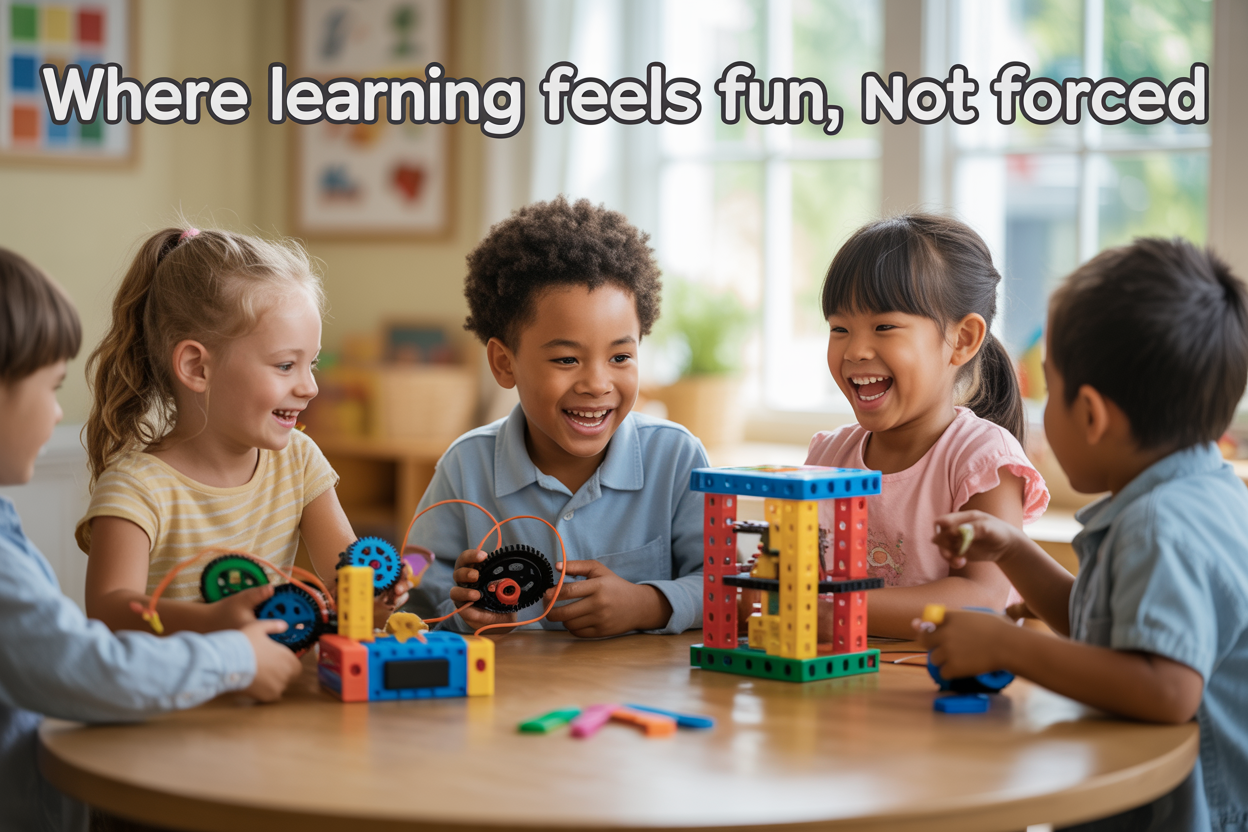
Most parents watch their kids lose interest in toys within minutes, even expensive "educational" ones. The problem isn't your child's attention span - it's that most toys feel more like homework than play.
This guide is for parents searching for educational toys for kids that actually hold attention, plus anyone looking for engaging toys for children that teach real skills without feeling forced. You'll discover why most toys fail to create engaging learning experiences, then explore three different approaches: traditional building toys for basic learning, interactive STEM building kits that hit the sweet spot, and advanced robotics that might be too complex for most kids.
We'll also reveal why smart STEM play beats passive toys every time, turning screen time battles into excited requests for "just five more minutes" of hands-on building.
The Problem: Why Most Toys Fail to Engage Kids

Short Attention Spans from Passive Toys
Most educational toys for kids today create a fundamental disconnect between what children need and what they actually receive. Traditional toys often require kids to sit still and follow predetermined patterns, but young minds crave active exploration and hands-on discovery. When children receive toys that simply light up or make sounds without requiring meaningful interaction, their brains quickly tune out the experience.
Picture a typical electronic learning tablet designed for preschoolers. Kids tap buttons, watch animations, and listen to pre-recorded lessons. Within minutes, they're looking around the room for something more stimulating. This happens because passive toys don't engage multiple senses simultaneously or challenge children to think creatively about solutions.
Interactive learning toys that encourage movement, manipulation, and problem-solving keep children engaged for significantly longer periods. Kids naturally learn through physical exploration, testing boundaries, and discovering cause-and-effect relationships through trial and error.
No Real Learning or Skill-Building
Many popular children's educational games focus on entertainment value rather than meaningful skill development. Flashy graphics and catchy sounds might capture initial attention, but they rarely teach transferable skills that children can apply in real-world situations.
Traditional educational products often emphasize memorization over comprehension. Kids might learn to recite numbers or letters, but they miss opportunities to understand mathematical concepts or develop critical thinking abilities. Fun learning activities should build foundational skills like spatial reasoning, logical sequencing, and creative problem-solving.
Real learning happens when children face age-appropriate challenges that require them to stretch their current abilities. Toys that provide instant gratification without requiring effort or persistence don't prepare kids for academic success or real-world problem-solving.
Kids Get Bored Quickly
Engaging toys for children share common characteristics that many mass-market products lack entirely. Children lose interest rapidly when toys offer limited possibilities for creative expression or don't grow with their developing capabilities.
Single-purpose toys create toy engagement problems because they can only be used in one predetermined way. Once kids master the intended function, the toy becomes obsolete. Fun educational toys that offer multiple play patterns and increasing complexity levels maintain interest over months or even years.
Boredom also stems from toys that don't connect to children's natural curiosity about how things work. Kids want to build, disassemble, modify, and experiment. Toys that discourage this exploration or break easily when handled creatively fail to provide engaging learning experiences that satisfy children's innate desire to understand their world.
Solution #1: Traditional Building Toys (Basic Learning)
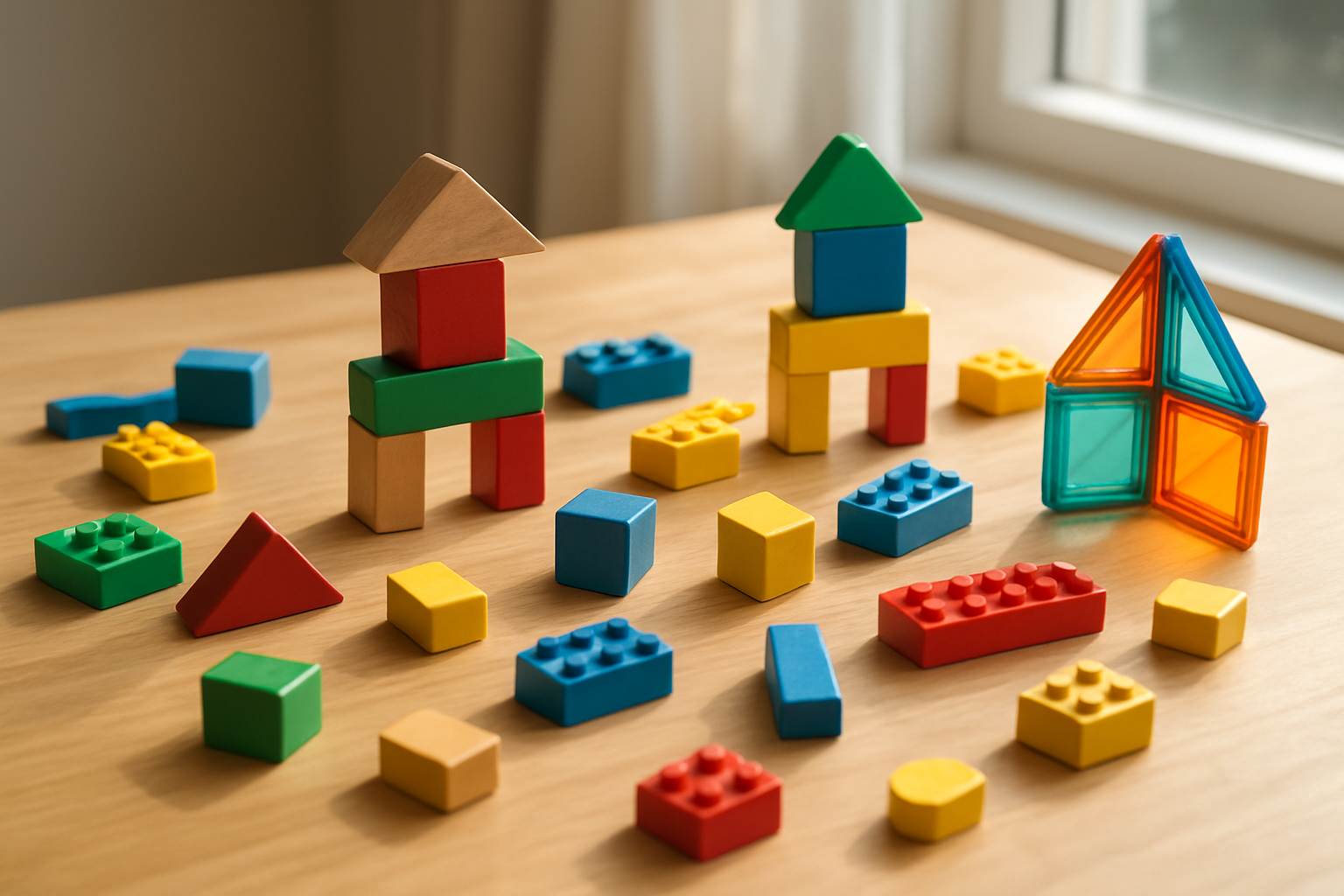
LEGO-style toys improve creativity
Traditional building blocks like LEGO have been the go-to choice for parents seeking educational toys for kids for decades. These classic sets allow children to construct everything from simple towers to elaborate castles, encouraging spatial reasoning and imaginative play. Kids can follow step-by-step instructions to build predetermined models, then tear them down and create something completely different. This open-ended nature helps develop problem-solving skills as children figure out how pieces fit together and experiment with different configurations.
The beauty of these building systems lies in their simplicity. Children as young as three can snap together large pieces, while older kids tackle complex architectural projects. The satisfying click of pieces connecting provides immediate feedback, and the colorful array of bricks captures attention for hours. Parents love watching their children's confidence grow as they master increasingly challenging builds.
But limited in: Motion
While traditional building toys excel at static construction, they fall short when kids crave dynamic action. Once built, most models simply sit there looking impressive but doing very little. Sure, you can push a car across the floor or pretend a spaceship is flying, but the actual movement relies entirely on a child's imagination rather than any mechanical function.
This limitation becomes particularly apparent as children grow older and their curiosity about how things actually work increases. They start asking questions like "Why don't the wheels really turn?" or "How do real machines move?" The static nature of basic building blocks can't satisfy this natural progression toward understanding cause and effect, gears, and mechanical principles that govern the world around them.
But limited in: Real-world mechanics
Standard building blocks teach spatial relationships and creativity, but they don't introduce children to fundamental engineering concepts. Real machines use motors, gears, pulleys, and sensors to accomplish tasks. Traditional blocks might look like these components, but they don't function like them. Kids miss out on learning how gears multiply force, how motors convert energy into motion, or how sensors detect environmental changes.
This gap means children don't develop an intuitive understanding of physics and engineering principles during their most formative learning years. They're essentially playing with simplified representations rather than functional systems. When they encounter real-world technology later, they lack the hands-on foundation that makes complex concepts feel familiar and approachable.
But limited in: Long-term engagement
The initial excitement of new building sets often fades as children exhaust the included instructions and their own creative ideas. Without new challenges or evolving complexity, even the most elaborate builds become routine. Kids who once spent hours constructing gradually lose interest and move on to other activities.
This pattern particularly affects children who thrive on progressive challenges and measurable achievement. They need engaging toys for children that grow with their abilities and offer fresh learning opportunities. Static building toys, while valuable for developing foundational skills, simply can't provide the dynamic, evolving experience that sustains deep engagement over time.
Solution #2: Interactive STEM Building Kits (BEST CHOICE )

Combines play + real learning
Interactive STEM building kits hit that sweet spot where kids don't even realize they're learning. These educational toys for kids pack serious educational value into activities that feel like pure play. Your child might think they're just building a moving robot or creating circuits that light up, but they're actually absorbing physics, engineering, and problem-solving skills. The magic happens when science concepts become tangible experiences rather than abstract lessons.
Hands-on building with movement + wiring concepts
These kits transform basic building into dynamic learning experiences. Kids work with gears, motors, sensors, and simple circuits while constructing their projects. They discover how electrical connections make things move, how different gear combinations affect speed and power, and why certain materials conduct electricity better than others. The tactile experience of connecting wires, positioning motors, and watching their creation come to life creates lasting understanding that textbook learning simply can't match.
Keeps kids engaged longer
Unlike traditional toys that lose their appeal after a few play sessions, interactive learning toys offer sustained engagement through variety and challenge progression. Each build presents new possibilities - today's walking robot becomes tomorrow's obstacle-avoiding vehicle. The combination of construction, programming elements, and immediate visual feedback creates what educators call "flow state" - that perfect balance where kids are challenged but not overwhelmed.
Encourages problem-solving
Real learning happens when things don't work the first time. These engaging toys for children deliberately present challenges that require creative thinking. When a motor doesn't turn or a light doesn't illuminate, kids naturally troubleshoot by checking connections, adjusting components, and testing different approaches. This trial-and-error process builds resilience and analytical thinking skills that extend far beyond playtime.
Builds confidence through creation
There's something powerful about building something that actually works. When kids see their handmade robot navigate around obstacles or their custom alarm system detect motion, they experience genuine accomplishment. This success builds confidence in their ability to understand and create technology, breaking down the intimidation factor that often surrounds STEM subjects.
Rechargeable + reusable (no frustration)
Smart design eliminates the battery drain frustration that kills enthusiasm for electronic toys. Rechargeable power systems mean kids can play without worrying about costly battery replacements or sudden power failures during exciting builds. Components are built to withstand repeated assembly and disassembly, so the same kit provides months of varied fun learning activities without breaking down.
Solution #3: Advanced Robotics Kits (Too Complex)

Powerful but: Expensive
Advanced robotics kits come with a hefty price tag that can shock even the most dedicated parents. Premium educational toys for kids in this category typically range from $200 to $800 or more, making them a significant investment for most families. While these sophisticated systems offer impressive capabilities like programmable movements, sensors, and AI integration, the cost often puts them out of reach for everyday purchase decisions.
The high price stems from cutting-edge components including microprocessors, advanced sensors, high-quality motors, and premium materials. Many parents find themselves questioning whether the educational value justifies spending the equivalent of several months' worth of engaging toys for children. When compared to interactive learning toys that cost under $100 and deliver similar foundational STEM concepts, the math becomes challenging for budget-conscious families.
Powerful but: Complicated setup
Getting these advanced systems running requires patience that most kids simply don't have. The initial setup process can take hours, involving multiple software downloads, driver installations, and complex calibration procedures. Parents often find themselves becoming the primary users during setup while excited children wait on the sidelines.
Many kits require specific operating systems, updated software versions, and stable internet connections for full functionality. The instruction manuals read more like technical documentation than fun learning activities guides. Troubleshooting connectivity issues, updating firmware, and managing multiple apps can turn an exciting unboxing experience into a frustrating technical support session.
Powerful but: Not beginner-friendly
These sophisticated educational toys for kids assume a level of programming knowledge and technical understanding that most children haven't developed yet. The learning curve is steep, often requiring weeks or months before kids can independently create meaningful projects. Unlike kid-friendly educational products designed for gradual skill building, advanced robotics kits can overwhelm beginners with complex interfaces and abstract programming concepts.
The gap between basic play and advanced functionality creates a frustrating experience where children need constant adult supervision and guidance. This dependency defeats the purpose of engaging learning experiences that should encourage independent exploration and creativity.
Why Smart STEM Play Wins

Balance between fun & learning
Smart STEM play hits that sweet spot where educational toys for kids actually feel like games rather than disguised homework. Kids naturally gravitate toward activities that challenge them without overwhelming their developing minds. When building kits combine colorful components with hands-on problem-solving, children enter a flow state where learning happens almost by accident.
The magic lies in disguising complex concepts within playful experiences. A child constructing a mechanical robot doesn't think about physics principles – they're focused on making their creation move and respond. This seamless integration keeps kids engaged for hours while absorbing foundational STEM knowledge. Interactive learning toys succeed because they respect children's natural curiosity while providing structured challenges.
Parents often struggle to find engaging toys for children that deliver educational value without feeling forced. Smart STEM kits solve this by presenting learning as discovery rather than instruction. Kids experiment, fail, rebuild, and celebrate small victories – all while developing critical thinking skills they'll use throughout their academic journey.
Builds: Creativity
Creative expression flourishes when children have open-ended tools that respond to their imagination. Quality educational toys for kids provide multiple building possibilities rather than single-use solutions. A well-designed STEM kit becomes a canvas where young minds can bring their wildest ideas to life.
Building activities encourage kids to think beyond instruction manuals. They start following directions but quickly begin modifying designs, combining pieces in unexpected ways, and inventing entirely new creations. This creative freedom develops flexible thinking patterns that benefit children in art, writing, and problem-solving across all subjects.
The best engaging learning experiences happen when kids feel ownership over their projects. They're not just assembling someone else's vision – they're becoming inventors, architects, and engineers. This sense of authorship boosts motivation and makes children more willing to tackle challenging builds.
Builds: Logic
Logical thinking develops naturally through hands-on construction activities. Children learn cause-and-effect relationships by connecting pieces and observing results. When a structure collapses, kids analyze what went wrong and adjust their approach. This trial-and-error process builds systematic thinking skills.
Fun learning activities that involve sequencing teach kids to break complex tasks into manageable steps. Building a programmable robot requires planning, organizing components, and following logical sequences. These skills transfer directly to mathematics, computer science, and everyday problem-solving situations.
Pattern recognition emerges as children notice how certain combinations create stability while others lead to failure. They begin predicting outcomes based on previous experiences, developing the analytical skills that form the foundation of scientific thinking.
Builds: Confidence
Success in STEM building activities creates powerful confidence-building moments. When children complete a challenging project independently, they experience genuine pride in their accomplishment. This success builds resilience and encourages them to attempt more difficult challenges.
Children's educational games that offer progressive difficulty levels allow kids to build confidence gradually. Starting with simple projects and advancing to complex builds helps children develop persistence. They learn that initial failures are stepping stones rather than dead ends.
The hands-on nature of these activities provides immediate feedback. Kids can see, touch, and test their creations, giving them concrete proof of their capabilities. This tangible success builds lasting confidence that extends beyond playtime into academic and social situations.
Conclusion
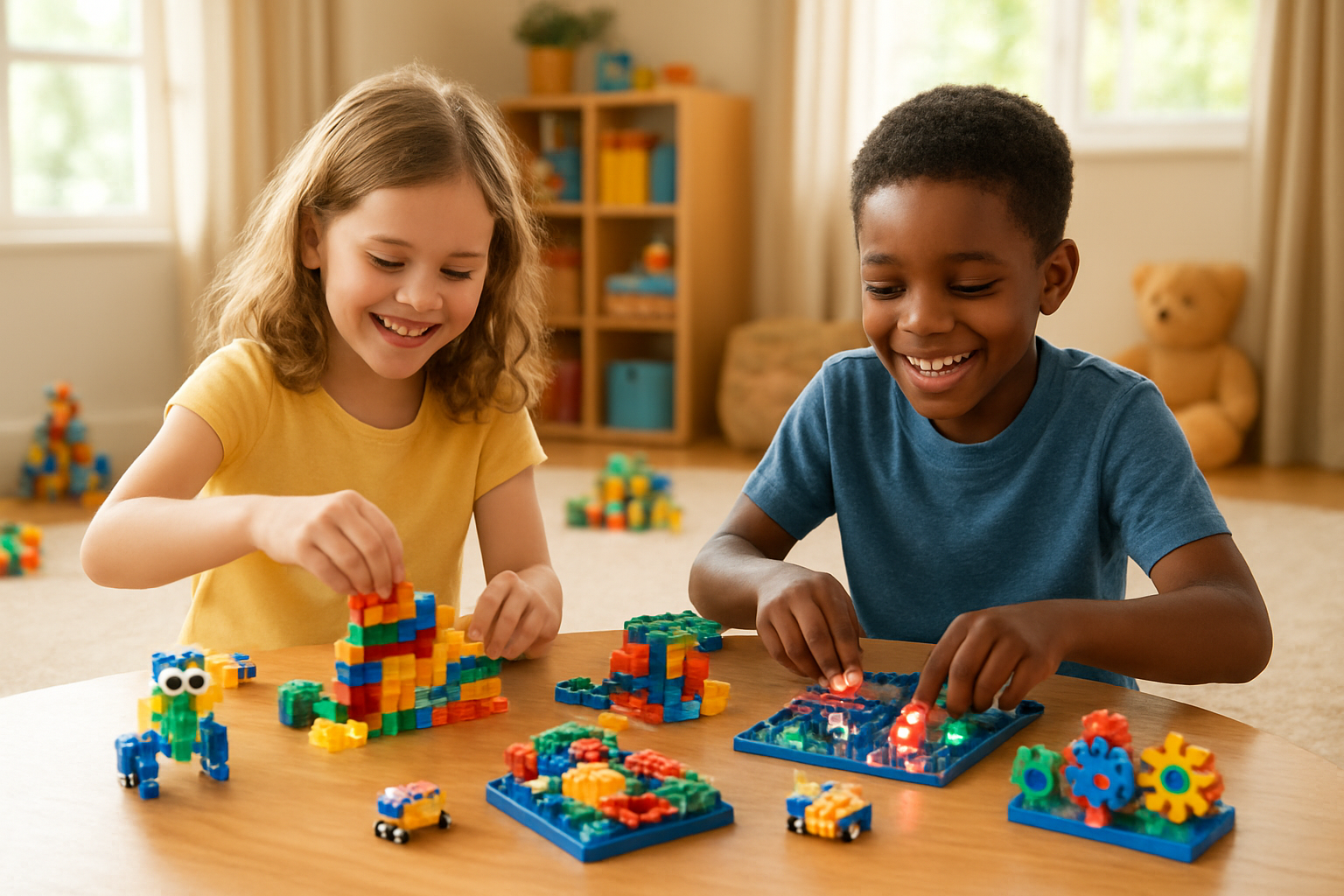
The choice between basic blocks, advanced robotics kits, and interactive STEM building sets comes down to finding that sweet spot where challenge meets capability. While traditional toys often fall short of true engagement and complex robotics can overwhelm young learners, interactive STEM building kits like SparkTrack strike the perfect balance. They combine hands-on learning with real electrical concepts, USB rechargeable convenience, and compatibility with existing block sets—turning playtime into genuine skill-building without the frustration.
When learning feels fun rather than forced, kids naturally gravitate toward longer, more focused play sessions. The testimonials speak volumes: parents report reduced screen time, improved concentration, and genuine pride in completed projects. If you're ready to transform weekend downtime into productive maker sessions that build both confidence and practical skills, an interactive STEM building kit offers the ideal pathway from simple play to meaningful learning.
👉 Do your kids get bored easily with traditional toys or learning methods? Share your experience below!
💡 If you’re looking for a smarter way to combine fun and education, exploring interactive, hands-on learning tools can make a big difference in how kids engage and grow.
👉 Curious to see how this works in real life?
Check out a simple way to make learning more exciting and engaging for kids.
